
Walk into ten Muay Thai gyms and ask, “What rank am I?” You may get ten different answers. Unlike Brazilian Jiu-Jitsu, karate, or taekwondo, traditional Muay Thai does not have one universal belt ranking system. Instead, ranking depends on the gym, country, organization, and whether the school follows a traditional Thai approach or a modern Western grading structure.
TLDR: Muay Thai traditionally has no official belt system, and skill is usually proven through training experience, sparring, pad work, and competition. Some modern gyms use colored armbands, shirts, shorts, or certificates to track progress, especially for beginners and children. The most respected “rank” in Muay Thai is still practical ability: technique, timing, toughness, discipline, and fight experience.
Why Muay Thai Ranks Are Different
Muay Thai developed as a practical combat sport, not a formal martial art built around ceremonial grading. In Thailand, fighters often begin young, training daily, sparring regularly, and competing frequently. Their level is judged by performance in the ring, not by a colored belt around the waist.
This is why you will rarely see Thai stadium fighters introduced as “black belts” in Muay Thai. Instead, reputation comes from fight records, titles, gym affiliation, and the quality of opponents faced. A fighter’s “rank” is often understood through questions like:
- How long have they trained?
- How many fights have they had?
- Which stadiums or promotions have they competed in?
- How skilled are they in clinch, elbows, knees, kicks, and defense?
- Can they teach others effectively?
In short, Muay Thai ranking is more practical than symbolic. However, as Muay Thai spread around the world, many gyms introduced structured ranking systems to help students set goals and measure progress.
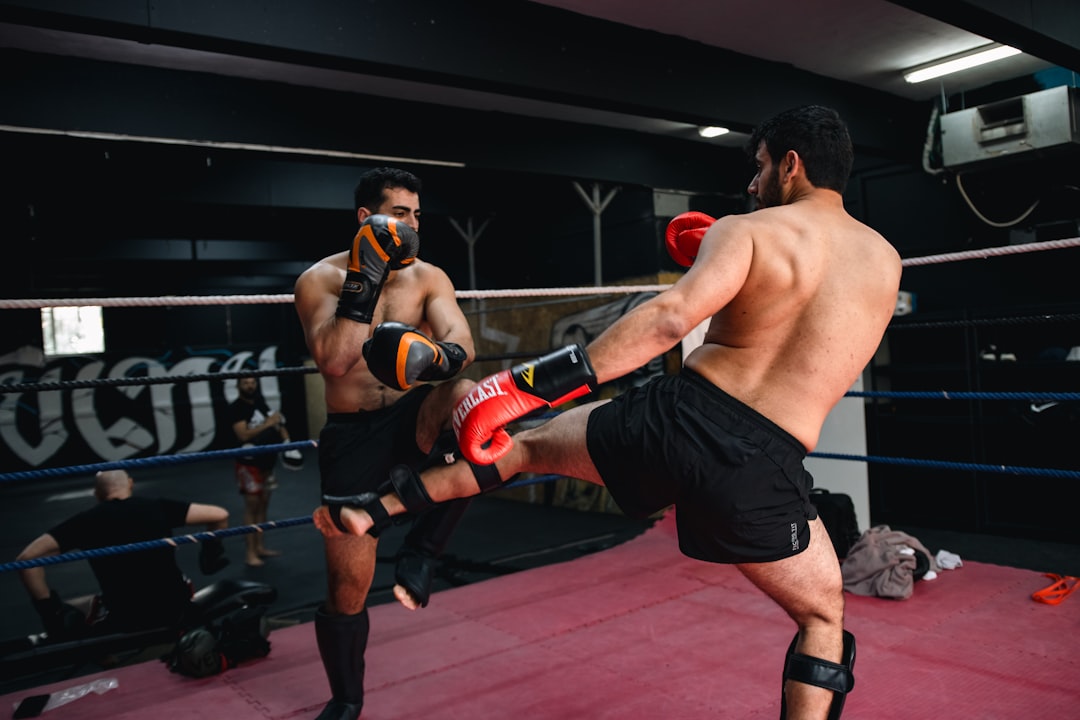
Does Muay Thai Have Belts?
No, not in the traditional sense. Muay Thai fighters do not typically wear belts to show rank. The boxing shorts, gloves, ankle supports, and armbands are functional or cultural, not equivalent to karate or judo belts.
One item often misunderstood is the pra jiad, the armband worn by some fighters. Traditionally, pra jiad are believed to bring protection, courage, and good fortune. They may be blessed by monks or given by family members or teachers. In authentic Thai culture, they are not a rank marker.
Another important item is the mongkol, the headpiece worn during the Wai Kru Ram Muay before a fight. Like the pra jiad, it has spiritual and cultural significance, but it is not a belt rank.
Modern Muay Thai Ranking Systems
Outside Thailand, many academies use rank systems to organize classes and motivate students. These systems vary widely, but they often use one of the following:
- Colored armbands to represent student levels
- Colored shirts or patches for beginner, intermediate, and advanced groups
- Shorts colors to show experience level
- Certificates after grading tests
- Khan ranking systems, sometimes used by Muay Thai organizations
The word khan is sometimes used to describe levels or grades in modern Muay Thai organizations. Depending on the school, students may progress through numbered khan levels, similar to how other martial arts use kyu or belt grades. However, there is no single global standard, so a “level 5” in one gym may not equal a “level 5” somewhere else.
A Common Muay Thai Rank Structure
Although systems differ, many gyms organize students into broad categories. A typical structure might look like this:
- Beginner: Learning stance, guard, footwork, basic punches, round kicks, knees, and defensive habits.
- Novice: Developing combinations, pad work rhythm, basic clinch skills, and controlled sparring.
- Intermediate: Improving timing, counters, ring awareness, conditioning, and more advanced clinch work.
- Advanced: Training with intensity, sparring competently, understanding strategy, and possibly preparing for competition.
- Fighter: Competing or training at a fight-team level with strong technical, physical, and mental preparation.
- Instructor: Teaching safely and effectively, correcting students, planning sessions, and preserving gym standards.
This type of progression gives structure without pretending that rank alone defines ability. In Muay Thai, someone with no formal rank but 30 fights may be far more capable than someone with an advanced certificate and little live experience.
What Do Students Usually Learn at Each Level?
At the beginner level, students focus on fundamentals. This includes stance, balance, footwork, jab, cross, hook, teep, roundhouse kick, basic knees, and simple defensive movements. The goal is not to look flashy but to build a safe and stable foundation.
At the intermediate level, training becomes more layered. Students learn to combine attacks, defend and counter, check kicks, catch kicks, enter the clinch, and control distance. Sparring is usually introduced or increased, but it should remain controlled and technical.
At the advanced level, students develop fight intelligence. This means reading opponents, setting traps, managing pace, using feints, balancing aggression with defense, and understanding scoring. Advanced students are expected to show discipline, composure, and respect in hard training.

How Promotions or Gradings Work
If a gym uses a formal ranking system, promotions usually happen through a grading test. This may include:
- Shadowboxing with correct form
- Pad work combinations
- Bag work rounds
- Partner drills
- Clinch technique
- Defensive reactions
- Conditioning exercises
- Technical sparring
- Knowledge of etiquette and rules
Some schools also require a minimum number of classes, months of training, or demonstrated attitude before promotion. Good coaches do not promote students just because they can hit hard. They look for control, consistency, humility, safety, and understanding.
Are Muay Thai Ranks Important?
Ranks can be useful, especially for beginners. They provide milestones, help coaches divide classes, and give students confidence as they improve. For children, colored levels can make training more fun and easier to understand.
However, ranks should not become the main goal. Muay Thai rewards what you can actually do under pressure. A rank may show that you passed a test, but it does not automatically mean you can spar well, fight well, or teach well. The best gyms use ranking as a guide, not as a substitute for real skill.
Instructor Titles: Kru and Ajarn
Two titles often heard in Muay Thai are Kru and Ajarn. Kru generally means teacher, while Ajarn is often used for a senior teacher or master instructor. These titles should be treated with respect, but they are not casual decorations.
A true Kru should have deep technical knowledge, teaching ability, ring experience or long-term coaching experience, and a strong connection to Muay Thai culture. An Ajarn is typically someone with many years of dedication and recognition. As with student ranks, standards vary outside Thailand, so the title is only meaningful when backed by skill, integrity, and reputation.
Competition as a Ranking Measure
In traditional Muay Thai culture, competition is one of the clearest measures of level. Amateur and professional fights reveal skills that cannot always be judged in class: composure, stamina, timing, pain tolerance, adaptability, and tactical awareness.
That said, not every student needs to fight. Many people train Muay Thai for fitness, confidence, self-defense, or enjoyment. A good ranking system should respect both paths: the recreational student who trains consistently and the competitor preparing for the ring.
Image not found in postmetaHow to Know Your Real Level
If your gym does not use ranks, you can still track progress. Ask yourself:
- Can I maintain balance while striking and defending?
- Do I understand distance and timing better than before?
- Can I spar calmly without panicking or going too hard?
- Am I improving in clinch, defense, and conditioning?
- Do senior students and coaches trust me as a safe partner?
These signs matter more than a colored armband. In Muay Thai, real progress is visible in how you move, react, listen, and train with others.
Final Thoughts
The complete Muay Thai ranking system is best understood as a mix of tradition and modern adaptation. Traditional Muay Thai has no universal belts, and rank is proven through ability, experience, discipline, and performance. Modern gyms may use armbands, shirts, shorts, khan levels, or certificates to create structure, but these systems differ from place to place.
Whether your gym uses ranks or not, the heart of Muay Thai remains the same: train hard, respect your coaches and partners, sharpen your technique, and stay humble. In the end, the most meaningful rank is not what you wear, but what you can demonstrate with control, courage, and respect.